15 Oct 2026
How to Create a Blog Post Outline That Ranks and Converts
A structured blog outline helps content teams create clearer, more valuable, and search-optimised articles. Learn how to plan topics, analyse competitors, build headlines, and organise content before writing.
Guide
Goal: To develop structured blog post outlines that improve content quality and make the writing process more efficient and systematic.
Ideal Outcome: You and your content team establish a repeatable process for producing high-quality, search-optimised content that consistently attracts users to your website, regardless of industry or niche.
Prerequisites or requirements: It is recommended that you have a foundational understanding of keyword research so you can clearly define the primary keyword for each blog post.
Why this is important: Website content:
- Improves search engine rankings
- Provides valuable information to users
- Supports lead generation and conversions
Content creation requires significant time investment. Preparing a structured outline ensures that time is used effectively. A strong outline enhances:
- Content clarity
- Structural consistency
- Overall quality
- Strategic focus
In short, it significantly increases the likelihood of publishing effective content.
Where this is done: In your browser, Google Docs, Google Sheets, and selected third-party tools.
When this is done: Whenever a new blog post is being developed.
Who does this: Any team member responsible for content creation.
Environment setup
Obtain access to the following tools (free trials are sufficient; no purchase required):
- BuzzSumo
- Bdow Headline Generator
- Readability Test Tool
- Moz Title Tag Tool
- Bdow Power Words
- CoSchedule Headline Analyser
Open the outline template file and create a copy. This file will be reused for each blog post.
Open the Popular Content Analysis Worksheet.
Define your objective & your main keyword
Before drafting any blog post, clearly define:
- The objective of the article
- The primary keyword
- The search intent
For the purpose of this SOP, we will demonstrate the process using the topic “hair loss treatments.”
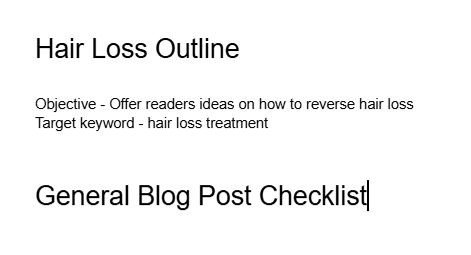
Rename your outline copy according to the topic.
Example: “Outline – Hair Loss”
Update the heading “Outline [blog post topic]” with your chosen topic.
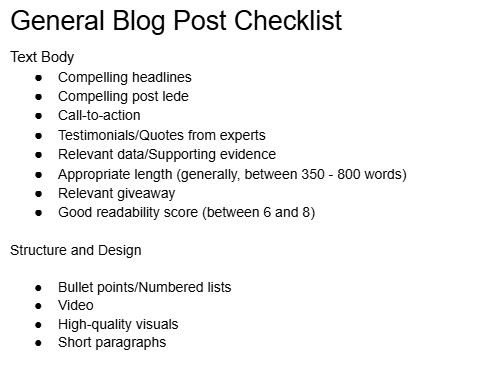
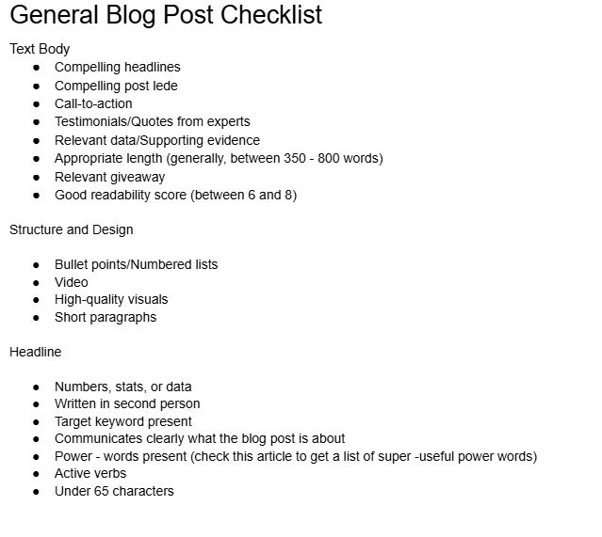
Under “General Blog Post Checklist,” you will find a universal checklist applicable to all blog posts.
Complete the following:
- Write your objective: What value will readers gain?
- Write your target keyword:
Most popular content analysis
For this example, the primary keyword is: “hair loss treatment.”
Open BuzzSumo and enter your keyword.
- Identify content with the highest engagement within the past 1–5 years.
- Note: Accessing results older than one year requires a premium plan.
Right-click the top three relevant results and open them in new tabs.
Open Google in Incognito mode (CTRL + SHIFT + N) and search the same keyword.
Select the top five relevant blog posts. Exclude:
- Homepages
- Wikipedia
- Non-blog content
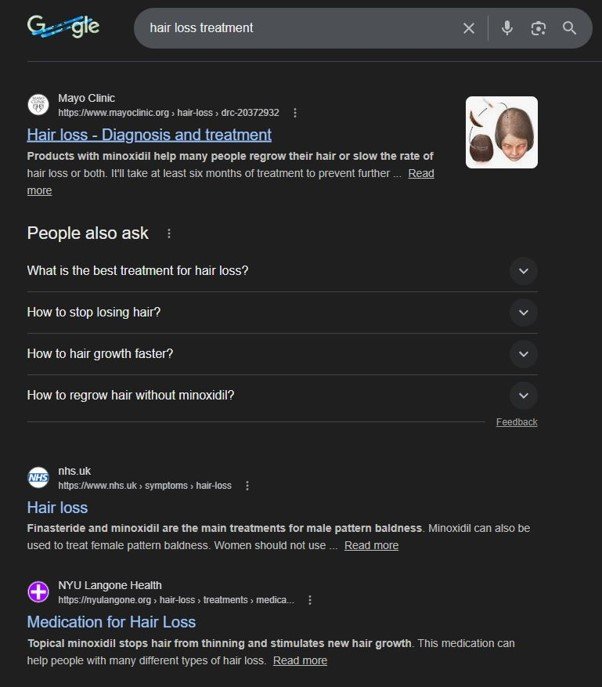
Open each selected result in a new tab.
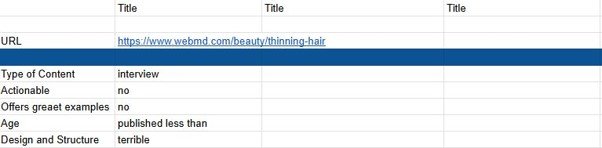
After reviewing all eight articles, complete the Popular Content Analysis Worksheet:
- Enter titles and URLs
- Analyse headline structure
Common headline characteristics include:
- Inclusion of the target keyword
- Promise of a benefit (e.g. “hair growth”, “fixes”, “remedies”)
- Active verbs (e.g. “stop”, “reverse”)
- Numbers or data (e.g. “6 fixes”, “12 treatments”)
Assess readability:
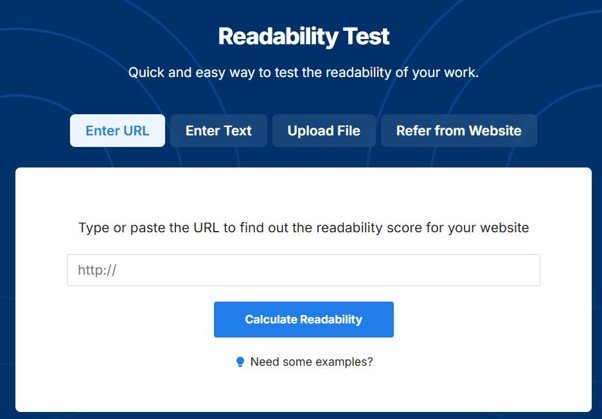
- Use the Readability Test Tool
- Aim for a readability score between Grade 6 and Grade 8
Compare selected articles against the General Blog Post Checklist to identify strengths and weaknesses.
Write compelling headlines
After reviewing competitor content, develop 10–20 headline variations.
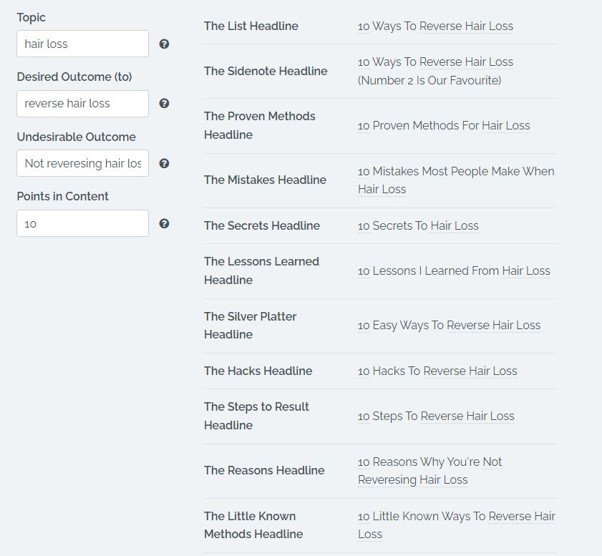
For inspiration, use Sumo Headline Generator.
- Complete all required input fields carefully
- Use the tool for inspiration only
Once you have drafted 20 headlines:
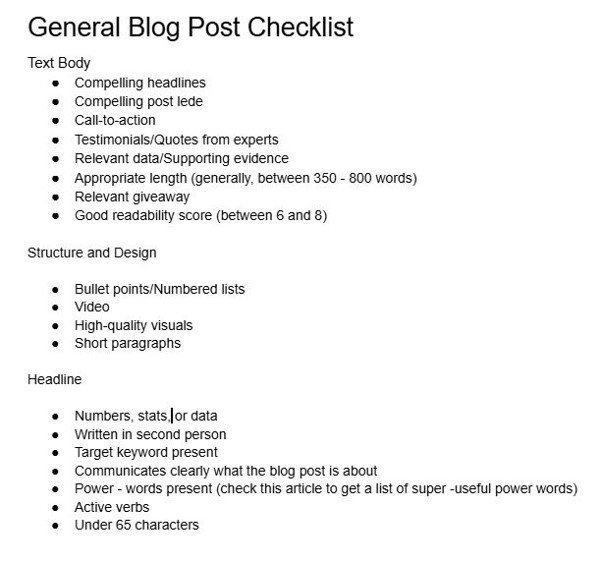
- Use the Moz Title Tag Tool to ensure titles are under 65 characters
- Compare each headline against the checklist
A strong headline should include several of the following:
- Numbers, statistics, or data
- Second-person phrasing
- Target keyword
- Clear topic communication
- Power words
- Active verbs
Narrow your list to the best 10 headlines.
Test these using CoSchedule Headline Analyzer.
- Aim for a score above 70/100
- Improve and retest your top three headlines
- Select the highest-performing option
Complete the outline
Return to your outline document.
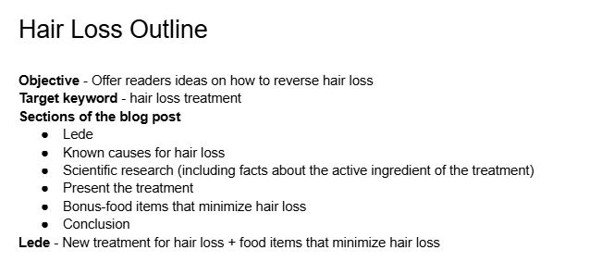
Define the sections of your post. For this example:
- Lede
- Known causes of hair loss
- Scientific research
- Presentation of the treatment
- Bonus: foods that minimise hair loss
- Conclusion
Writing the lede
An effective lede should:
- Be specific
- Contain a teaser
- Be concise (1–2 sentences)
- Include the target keyword
- Reference data or measurable outcomes
In this example, the lede introduces:
- A new treatment showing promising results
- Supporting dietary recommendations
Plan content structure
To simplify writing:
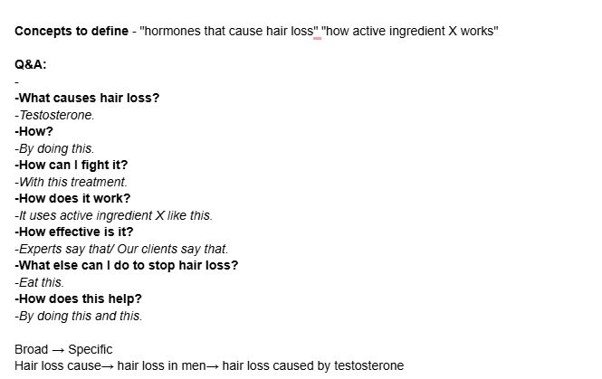
- Identify key concepts readers must understand
- e.g. hormones linked to hair loss
- mechanism of active ingredient
Use a Q&A framework:
- Anticipate reader questions
- Provide structured answers
- Move from broad explanations to specific details
Before drafting, review the checklist and identify enhancements that will improve your content.
Potential additions:
- Call-to-action (e.g. free sample)
- Testimonials
- Giveaway or bonus resources
- Video demonstration
- High-quality visuals (e.g. before-and-after imagery)
Determine where each element fits within the outlined sections.
Review your outline
Before drafting:
- Review the checklist at the bottom of your document
- Mark completed criteria
- Ensure alignment with quality standards
Certain elements (e.g. readability, length) will be finalised during writing, but should remain top-of-mind.
You now have a structured, repeatable outline framework for producing high-performing blog content. Apply this process consistently to maintain quality, improve rankings, and strengthen content performance.