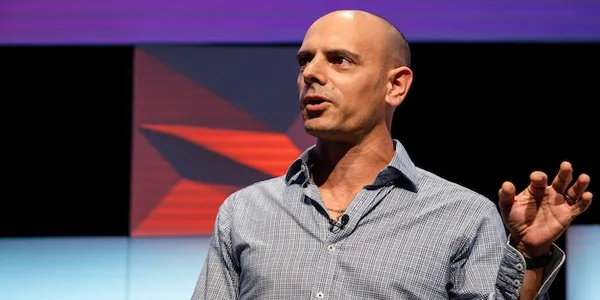
Dean Salakas has sold four businesses, the best known being The Party People, the balloon and costume retailer his mother started from a single shop. He and his brother bought it from her in 2007 and sold it outright in December 2024. On the Cemoh Marketing Podcast, he talks with Simon Dell about what held up across four exits and where he thinks AI actually fits on the shop floor.
What Mattered More Than Margin
Dean thought of the business as helping people throw parties. That framing decided which parts stayed: services that lost money on paper remained because they served the goal, and products that didn't serve it got cut regardless of margin. He applied the same filter once the business grew past a single shop into Australia's largest party retailer, judging every new product line by whether it helped someone throw a better party.
Say it Loud or Nobody Else Will
His instinct for making noise predates The Party People by years. In 1999, while still in high school, he launched the business online and became Australia's first retailer to offer click and collect. By 2003, working on a university project, he discovered Google AdWords just as it launched in this country and became its first advertiser here, paying one cent a click.
At a networking event, Dean has no trouble naming what he does. "I'm just like... the chief party dude. We're Australia's largest party store, we're the biggest and the best," he said. His advice for founders who mumble through the question runs along the same line: say it loud, because nobody else will say it for you.

The First Five Seconds
Dean remembers how people reacted walking into The Party People. "Wow, this place is massive," was the common response, with balloons and decorations stacked toward an eight-metre ceiling and every wall packed with product. He compares it to the way people judge a person: the verdict lands in the first five seconds, long before anyone reads a price tag.
He sees Mecca and JD Sports getting that right today. A store walk through JD Sports gave him the same reaction, with strong merchandising, engaged staff and video playing throughout the shop. Barbeques Galore and Lincraft came up in the conversation as retailers who lost that experience and then struggled to explain the drop in sales that followed. Dean's read goes further than simply saying the stores got worse: when those businesses hit cash and capital constraints, the loyalty programs and in-store experience were the first things cut, and that set off a downward spiral. As he put it, "there was something that started it... it wasn't the first thing that was the problem."
Why Everyone Overestimates Online Retail
Ask most people what share of Australian retail happens online and they'll guess somewhere close to 80%. The actual figure, after three decades of e-commerce growth, sits closer to 20%, with the COVID spike reverting to that long-term trend once lockdowns ended. That gap between perception and reality matters for budgeting too: a marketing team planning as though 80% of spend should chase a channel that only carries a fifth of sales is solving the wrong problem.
Dean's proof point comes from a US airport, where a fully automated Amazon Go store sat empty beside an equally empty self-checkout fridge setup, while the staffed counter a few metres away had a line of customers. People want to buy from people, even when the automated option moves faster. He also pushed back on the fear that opening a new store eats into online sales: in his experience, and in every other retailer he's asked, a new store in a suburb lifts online sales in that same suburb. Pure online retailers are reading the same signal, and Oz Hair and Beauty has been opening physical stores for years, something Dean remembers discussing with their founder back when the chain had none at all.
Paying For Someone Who Cares
Simon has his own version of this from a board game store he opened six weeks before this recording. A former CTO, five years from retirement, works the floor because he owns 350 board games and wants to talk about all of them. Twenty-five Google reviews in, and almost every one names a staff member by name.
"Help people, don't sell to them," Dean said. "If you're helping, you're solving a problem. If you're selling to them, you're selling stuff to them." A cheaper hire who doesn't care about the product ends up costing more over time than a pricier one who does, once lost sales and poor reviews are counted.
What AI Actually Changes
Dean's take on AI in retail is calmer than most of what gets said about it. Some retailers already run nightly inventory counts with small robots, essentially a Roomba with a pole on top, reading stock levels off every shelf, while others haven't gotten past the occasional ChatGPT question. He's also seen robots stacking shelves overseas, a sign the same shift hitting inventory counts is coming for other parts of the shop floor too.
Simon's own setup shows the gap closing from the other side. He runs AI on the back end of his new store's Shopify site, uploading orders, writing product descriptions and sorting items into categories, then has dinner with his kids and comes back to finished work. It gets things wrong sometimes, like inventing how a board game works purely from its title, so he treats it as a new staff member that still needs training and boundaries.
Dean draws a comparison to when computers first showed up: people assumed their jobs would disappear, and instead the jobs changed shape. He expects the same with AI, only faster, fast enough that plenty of people won't have time to adjust before their role looks different. His advice to retailers is to work out where they'll fit in five years, before that decision gets made for them.
A WhatsApp Group With One Rule
Dean's current focus didn't start as a business plan. At a conference, he opened a WhatsApp group with a friend just to work out where to go drinking that night. It had a hundred people in it by the end of the first day, three hundred by the end of the conference, and has grown past four thousand members in the eighteen months since.
One rule keeps it that size, by his account: no pitching. Service providers ask to advertise inside the group constantly, and he turns down every one of them, even though he estimates he's leaving "hundreds of thousands of dollars" on the table by refusing. The same rule holds at his in person events: sponsors pay for the dinners and drinks, but they don't get a speaking slot or a chance to pitch from the stage. If a member needs a service, they ask the group for a recommendation themselves.
That's different from other retail groups Dean has seen, where the profit motive eventually took over. His version runs on a simpler rule: whatever's best for the member comes first, and the business model gets built around that.
Listen to the full conversation on Apple Podcasts or Spotify. Connect with Dean Salakas on LinkedIn.
If your own retail or ecommerce marketing needs the kind of outside read Dean gives his guests, Cemoh runs fixed-fee marketing audits with a 12-month roadmap, or can match you with a vetted Australian marketer within 48 hours.