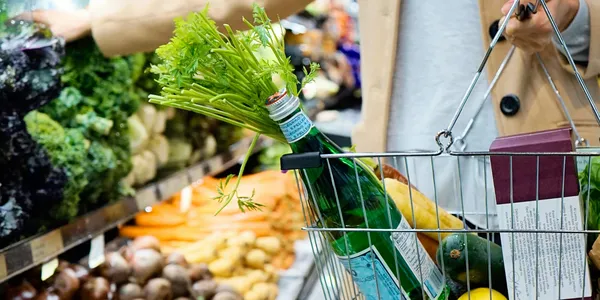
For years, FMCG brands focused on winning shelf space. That made sense. Retailers controlled visibility, distribution, discovery and ultimately access to the customer.
The brands that won secured better ranging, stronger promotional visibility, better placement and larger media investment.
But the balance of power is shifting. And many FMCG brands are now facing a much bigger strategic risk than distribution - they are losing direct proximity to the customer.
This is something I’ve touched on in recent articles exploring:
Because increasingly, the future of growth will not simply belong to brands with the biggest budgets, it will belong to brands with the deepest customer understanding.
Retailers Now Own More Than Shelf Space
Today, retailers increasingly own the customer data, the loyalty ecosystem, the personalisation layer, the retail media network and in many cases, the recommendation engine itself. That changes the relationship dramatically. Because increasingly, retailers understand who customers are, what they buy, how often they buy, when they switch brands, what price sensitivity looks like and what behaviours predict future purchasing decisions. That’s incredibly powerful. Especially in a world moving rapidly toward AI-driven recommendation, predictive personalisation and agentic commerce.
For years, FMCG brands could rely on awareness, distribution and retailer scale. Increasingly, that is no longer enough.
Shelf Space Is No Longer Enough
For decades, FMCG growth was built around physical distribution. Today, discovery happens everywhere. On TikTok, Instagram, creator channels, Reddit, search, AI tools and customer communities. Increasingly, customers are discovering brands long before they arrive at a supermarket shelf. That changes what growth looks like, because brands can no longer rely solely on retail visibility to drive loyalty. They need direct emotional connection with customers, and the brands building that connection fastest are creating a major strategic advantage.
The Smartest FMCG Brands Are Building Customer Ecosystems
Some of the most interesting FMCG growth stories right now are not being built through traditional advertising alone, they’re being built through community, creators, owned audiences and direct customer relationships.
Prime is a perfect example. The brand built cultural obsession and customer demand before scale distribution fully caught up. Retail became the amplifier of demand, not the creator of it. That’s a very different growth model from traditional FMCG. You can see similar shifts happening across wellness brands, challenger food brands, beauty brands and QSR loyalty ecosystems.
The smartest brands are investing in creator ecosystems, first-party data, CRM, subscriptions, customer communities and personalised engagement, because they understand something important. The closer a brand is to the customer, the more resilient it becomes. Especially during retailer negotiations, pricing pressure, promotional cycles, algorithmic change and economic uncertainty.
One of the biggest shifts happening right now is the growth of retail media networks. Retailers now offer FMCG brands extraordinary targeting capability through their loyalty ecosystems and customer data. But it also creates an interesting strategic tension, because the more FMCG brands rely on retailer ecosystems for growth, the more distance can emerge between the brand and the customer relationship itself. That’s a dangerous place to be long term. Especially as AI begins influencing product recommendations, shopping journeys, replenishment behaviour and personalised decision-making. The brands closest to the customer will increasingly have the strongest recommendation advantage.
The World’s Biggest FMCG Brands Are Already Becoming Decisioning Businesses
This shift is already happening inside some of the world’s largest FMCG organisations.
PepsiCo recently announced its ambition to become an “agentic AI-first” business by 2026. What’s interesting is not simply that they are investing in AI, it’s how they are using it. Through Salesforce’s Agentforce and Data Cloud ecosystems, PepsiCo is increasingly connecting retailer data, inventory signals, promotional effectiveness, customer behaviour, local demand shifts and predictive modelling to make faster and more intelligent commercial decisions in real time.
In many ways, they are evolving from a traditional FMCG organisation into a real-time decisioning business. That’s a profound shift. Because the future advantage for FMCG brands will not simply come from distribution, awareness or campaign scale, it will come from how intelligently brands understand and respond to customer behaviour across connected ecosystems.
And this is exactly why customer ownership matters.
The richer the customer signals a brand owns directly, the more intelligent its decisioning capability becomes. Retailers still hold enormous power through loyalty data, basket behaviour, purchase frequency and pricing signals, but brands have an opportunity to build something equally valuable - direct emotional connection.
Understanding routines, preferences, wellness goals, lifestyle behaviour, community participation, creator engagement and intent signals. That’s where the next generation of FMCG growth will come from. Because in an AI-driven and increasingly agentic commerce world, brands that deeply understand their customers will not simply market more effectively, they’ll make better decisions faster. And increasingly, they’ll become stronger recommendation candidates across the entire digital ecosystem.
What I’d Be Doing If I Was Leading an FMCG Brand Right Now
If I was leading an FMCG business right now, I think the first thing I’d recognise is this: The old growth model is changing faster than many organisations realise. Retail relationships still matter enormously, but customer ownership is becoming strategically critical. And that requires FMCG businesses to think very differently about capability, talent and growth systems.
1. Stop Thinking Like a Traditional FMCG Business
Many FMCG organisations still operate around annual campaign cycles, retailer calendars, media planning windows and mass-market assumptions. Meanwhile, customer behaviour is now shifting: daily, contextually, algorithmically and increasingly through AI-driven recommendation environments.
The brands winning right now are operating much closer to: real-time decisioning, behavioural understanding, community engagement and connected customer ecosystems. That’s a very different operating model.
2. Hire From Outside the Sector
One of the biggest risks for FMCG businesses is becoming too internally conditioned by traditional category thinking. In many ways, FMCG brands now need to learn from industries like banking, insurance, telecommunications airlines and loyalty businesses. Businesses that have historically depended on direct customer strategy because they didn’t have retailer ecosystems standing between them and the consumer.
As a result, these industries are already significantly more mature in customer lifetime value, loyalty infrastructure, behavioural understanding, retention modelling, churn prediction, real-time decisioning and personalised engagement ecosystems.
They’ve spent years building the capability to understand customers deeply, predict behaviour, personalise experiences, reduce churn and optimise customer value over time. That capability is becoming increasingly important in FMCG too, because in an AI-driven world, the brands with the richest customer understanding will increasingly have the strongest competitive advantage. FMCG businesses need more of that thinking inside the room, because the future competitive advantage will increasingly come from customer understanding, not just distribution scale.
3. Build Direct Customer Ecosystems
The smartest FMCG brands are no longer relying solely on retailers to understand customers. They are building loyalty programs, subscriptions, creator ecosystems, communities, educational content, SMS and CRM journeys and owned audience platforms. Not because retail disappears, but because direct customer signals are becoming strategically valuable AI infrastructure. The richer the customer understanding, the smarter the decisioning becomes.
4. Think Beyond Campaigns and Into Decisioning
This is where PepsiCo’s “agentic AI-first” ambition becomes interesting. The future growth advantage for FMCG brands will not come from simply producing more campaigns faster, it will come from making better commercial decisions faster. Understanding when customers are changing behaviour, where loyalty is weakening, what products are gaining momentum, what communities are influencing preference and how purchasing intent is shifting in real time. That’s a very different capability from traditional brand marketing.
5. Build a Brand AI Systems Will Trust
In an agentic commerce world, recommendation becomes incredibly important. And recommendation is increasingly influenced by customer sentiment, engagement, reviews, trust, loyalty, behavioural signals and community advocacy. The brands closest to the customer will increasingly have the strongest recommendation advantage. That’s why customer ownership is becoming one of the most important strategic priorities in modern FMCG.
Final Thought
For years, FMCG brands focused on winning shelf space. Increasingly, the brands that win will be the ones that own customer relationships. Because in an AI-driven world, the brands closest to the customer will ultimately be the brands that get remembered, recommended and chosen.
About the Author
Alicia Rieniets is the founder of CMO On Call, a fractional marketing consultancy helping organisations drive growth through aligned brand, customer and performance strategies. With over 20 years’ experience across brands including Ford, Bupa, Australia Post and UniSuper, Alicia is known for transforming marketing functions into commercially driven systems that deliver measurable results. She works closely with leadership teams to simplify complexity, unlock growth and build marketing that works.