



A Real Marketing Strategy for Small Business
Finally, a practical marketing strategy for small business owners in Australia. No jargon, just real-world advice to help you connect with customers and grow.
02 Nov 2026
The lesson for any retailer: build something people turn up for. A workshop, a tasting, a demo day, a club.
Blog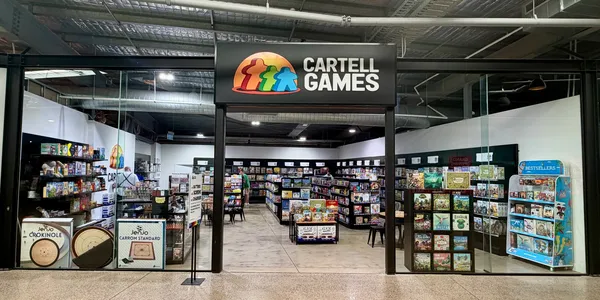
I have spent years telling business owners how to market themselves. This year I opened a shop and had to do it myself.
The shop is Cartell Games, a board games store at DFO Jindalee in Brisbane that also stocks trading cards. It has been the most useful marketing education I have had in a decade. Retail strips the theory away. You put something in the window on Monday and by Saturday you know whether it worked, because the till tells you.
Some of what I preach held up. Some of it did not survive contact with a Saturday afternoon. Here are six lessons that apply to almost any small retailer, whether you sell games, gelato or garden tools.
A shopping centre gives you passers-by. It does not give you customers who come back. The single biggest shift in our marketing was giving people a reason to visit that had nothing to do with buying something.
For us that is a free games night. Tables go out, people bring friends, and on our first night the tables spilled out into the centre's concourse. That turned out to be the best advert we have ever run. Everyone walking past saw a full room of people having a good time, and a fair few of them came in to ask what was going on.
The lesson for any retailer: build something people turn up for. A workshop, a tasting, a demo day, a club. It gives regulars a habit, it gives newcomers a low-risk first visit, and it gives you something genuine to post about every month.
Marketers love a clever line. Shoppers mostly want to know what it costs. In a shop, people decide whether to pick something up in a few seconds, and an unclear price is the fastest way to lose them.
Our in-store posters now follow one rule: the price is the biggest thing on the page after the headline. A fun line earns attention, the product shot earns interest, and a large, clear price closes the gap. A poster that makes someone ask at the counter how much something is has done half its job.
The same goes for shelf tickets, window decals and social posts. If a customer has to work to find the price, most won't.
Most small retailers have an email list and send everyone the same newsletter. That wastes the most valuable thing a shop owns: knowing what each customer actually buys.
We connected our point of sale and online store to our email platform, then built segments from purchase history. Someone who has bought Pokémon cards lands in a Pokémon group automatically. Someone who buys jigsaw puzzles lands in a puzzle group. In-store sales count too, not just online orders.
Now a restock email goes only to the people who care about it. That is how you keep open rates up and unsubscribes down, and nobody who only buys puzzles is bombarded with trading card releases. You don't need a big list for this to work. You need clean data and a few well-chosen groups.
The publishers and brands you stock spend serious money building anticipation for their products. A small shop can't match that budget, but it can borrow the moment.
When a new trading card set or game lands, the publisher has already told its fans the date. Our job is to be the local answer to the question "where can I get it?" We post a launch tile in the days before release with the product, the date and what's in stock, then open the doors on the morning. The anticipation is already there. We just point it at our counter.
Every retailer has a version of this. A new season's range, a brand's national campaign, a product that's trending. Find the moments your suppliers are already paying to promote, and make sure your shop is the obvious place to act on them.
A good Google review helps you in search. It can also be your best social post of the week. When a customer writes something kind, we turn the best line into a simple branded tile and share it, with their first name or initial only.
It costs nothing, it's more believable than anything we could write about ourselves, and it quietly reminds other happy customers that reviews matter. Ask for reviews at the counter, then give the good ones a second life.
Some of the most effective marketing we have done was barely marketing at all. We made a plain "We take cash" post. It was not clever, but it answered a question plenty of people never think to ask and it removed a reason not to come in.
Every shop has these invisible barriers: parking, opening hours, whether kids are welcome, whether you can try before you buy. Listen to the questions people ask at the counter. Each one is a piece of content waiting to be made, and each answer removes a reason someone might have stayed away.
None of this is new. Give people a reason to show up, make the offer clear, talk to customers about what they actually care about, and remove the obstacles. What retail adds is speed. You see what works within days, not quarters, and you can't hide behind a dashboard.
If you run a shop and your marketing feels like guesswork, start with one of these six and measure it at the till. And if you'd like help working out which one matters most for your business, that's exactly what we do at Cemoh. Got a marketing problem? We'll help you fix it.
Simon Dell is the CEO of Cemoh, Australia's fractional marketing network, connecting businesses with experienced fractional CMOs and marketing professionals. Find out more at cemoh.com.
Suggested Consultants
Here are some suggested articles that are closely related to this post
Finally, a practical marketing strategy for small business owners in Australia. No jargon, just real-world advice to help you connect with customers and grow.

What is digital marketing consulting and how does it work? We explain what a consultant does, why you need one, and how to hire the right partner in Australia.

Build a small business marketing strategy that works. This guide offers practical, no-nonsense tips for real results, designed for Australian business owners.

Learn what is growth marketing with our practical guide to mindset, strategies, and experiments that drive real, sustainable business growth.

Tired of marketing plans that just gather dust? Learn how to create a marketing plan with actionable strategies and real-world advice to drive growth.

Thinking about outsourcing social media manager duties? This guide covers how to find, hire, and manage the right expert for your Australian business.