
AI Has No Nuance — And That's Your Competitive Advantage
Here's the paradox of the AI content era: yes, there is more content than ever. But there is also less distinctive content than ever.
24 Apr 2026
When production becomes free and infinite, production can no longer be the thing that makes your brand distinctive.
Blog
A decade ago, the phrase that made every professional designer want to smash their face into a wall was: "Can't you just quickly whip that up?"
In 2026, it has a successor; "Can't AI just do it?"
And the uncomfortable truth is that, quite often, yes it can. AI can generate a logo concept, a social tile, your landing page hero image, a pitch deck, an explainer diagram. Twelve variations of each, in under a minute. No lengthy brief needed.
So, surely this is the end of the conversation, right? Actually, it’s turning out to be the beginning of one.
Open LinkedIn and scroll for ninety seconds. Look at the launch graphics, the rebrand reveals, the hiring posts, the case study covers. Look at the landing pages of any ten startups you've heard about this year. Notice anything? They all look like cousins.
The same luminous gradients. The same ‘not-quite-Inter’ sans-serif typeface. The same dreamy AI-rendered hero image of a person staring contemplatively into nothing. The vaguely optimistic tone of voice. Same little sparkle emoji in the headline.
This isn't an accident, and it isn't actually a failure of AI, either. It's AI doing exactly what it was built to do.
Here's something worth understanding if you either work in, or buy, creative services - generative AI models don't invent. They predict. They've been trained on billions of pieces of design, writing, illustration and photography that already exist, and when you give them a prompt, they produce the statistical middle of everything they've seen before. The most probable pixel. The most predictable phrase. The safest layout.
That is incredible technology. But it is also, by definition, average.
Use it once, and you get a reasonably polished result faster than any junior designer could manage. Use it at scale, across an entire industry, however, and you get a homogenising effect I don't think many people fully anticipated. Everyone is reaching for the same tool, asking it broadly similar questions, and the baseline output drifts steadily toward a shared aesthetic. Brands begin to just blur into each other. The thing that was meant to unlock creativity has quietly started to cancel it out.
When production becomes free and infinite, production can no longer be the thing that makes your brand distinctive.
I should probably say something at this point.
Having spent over 11 years as a full-time designer, I used to despise AI when it came to anything creative. Canva was my particular nemesis - the template-driven, drag-and-drop bastardisation of design that reduced years of training to a weekend hobby anyone could pick up. I watched non-designers discover Canva - and then other generative tools - and I'd internally scream every time a client rocked up with a perfectly awful AI-assembled mood board (or worse still, a logo) asking why our work took longer than "that thing I put together over lunch". To me, it all felt like the slow unwinding of the profession I'd spent more than a decade mastering.
I must admit, my view has shifted considerably.
These days, I work on the marketing side of the fence, and I actually use AI tools almost every day. I use them to explore directions quickly, to pressure-test ideas, to conceptualise faster than I could with pen and paper, and to produce first passes of work in fifteen minutes that would previously have taken half a day. I have genuinely grown to respect AI as a powerful aid to creative thinking.
So for the record - I'm not worried about AI replacing human designers. I don't think it can. AI lacks nuance. It still depends entirely on a human creative brain feeding it the right prompts in the first place. Bad brief in, bad output out - that part hasn't changed.
This isn't a theoretical problem. Have a look at what's happened to some enormous, extremely well-resourced brands over the last eighteen months.
In 2024, Coca-Cola attempted to reimagine its iconic "Holidays Are Coming" campaign using generative AI. The same red trucks, same snowy streets, bottles held aloft. The reaction was… not great. Viewers called it "soulless". The faces of the people in the campaign looked almost-but-not-quite right. The emotional weight of the famous original just wasn't there. Coke tried again in 2025 with anthropomorphic polar bears and sloths admiring the trucks, seemingly to avoid having to render human faces at all. That one didn't land either.
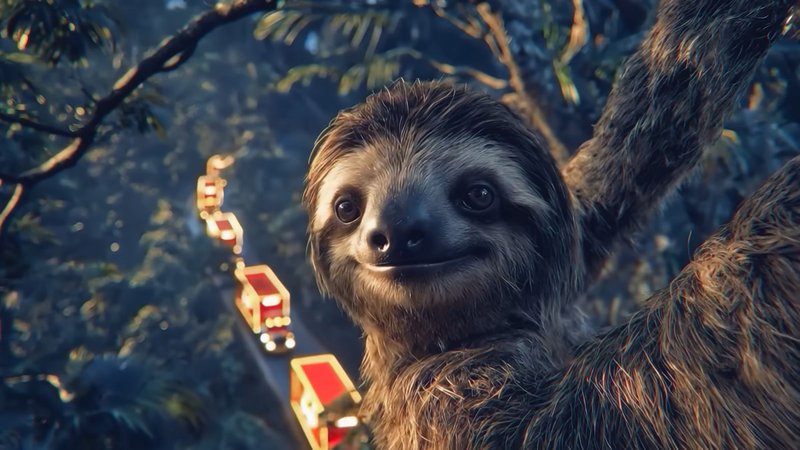
(Image Credit: Coca-Cola)
Toys 'R' Us produced an entirely AI-generated ad using OpenAI's Sora, telling the origin story of the brand's founder. The internet took about thirty seconds to dub it "AI slop". Not exactly the association the brand was going for.
And then there's Valentino. A luxury brand whose entire business model rests on the perception of artistry, craftsmanship and human creative mastery. They released an AI-generated campaign for its DeVain handbag line and were promptly shamed for looking "cheap" and "tacky". For a brand that charges four-figure prices on the basis of exquisite human skill, that's not a minor wardrobe malfunction. That's the entire positioning catching fire in public.
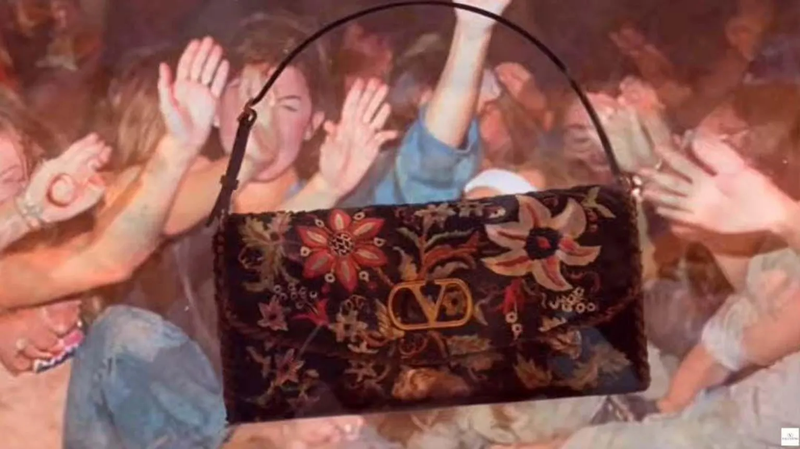
What do these campaigns have in common? Enormous budgets. Best-in-class agencies. First-class access to every AI tool on the market. And none of it saved them. Because the actual job these ads were supposed to do (carry emotion, earn attention) isn't a production problem. It's a craft problem. Which is exactly the problem AI can't solve on its own.
The design craft has been chronically underrated for as long as I've been in the industry. Somewhere along the line, "creative work" got flattened into "just make it pretty", and the profession absorbed years of "just make the logo bigger" and "can we try it in a different colour?". Now the same dismissal has turned up in a newer costume: "can't AI do it?"
But craft was never just execution. Anyone who's worked with a genuinely great graphic designer knows what they actually do. They hold a brand's voice in their head. They feel the wrongness of a terrible typeface pairing before they can articulate why. They know when a layout needs tension and when it needs to breathe. They catch the cultural reference that makes a concept land, instead of quietly dying on arrival. They understand, in a way no AI model possibly can, why a particular choice is right for this particular project, at this particular moment, for this particular audience.
That can't be manufactured. That isn't the output of a simple prompt. That is creative knowledge - accumulated slowly, over thousands of hours of looking, noticing, rejecting and refining. It lives somewhere AI simply can't reach, because AI wasn't there for any of it.
Milton Glaser, the designer behind the I ❤ NY logo, once said: "There are three responses to a piece of design - yes, no, and WOW. Wow is the one to aim for."
Granted, AI is very good at landing on "yes". The image is fine. The copy is fine. The layout is fine. Everything is adequate. Nothing is wrong… But nothing is memorable either.
"Wow" is a different animal entirely. Wow requires a point of view. A human insisting that this word belongs here instead of any of the five thousand alternatives. That this colour has been chosen deliberately, because it earns its place. That this composition is unexpected, because unexpected is what this brand needs. Wow is what happens when someone who genuinely understands the brand, the audience and the cultural moment makes a series of deliberate, disciplined and occasionally brave decisions. None of those decisions are average.
Average has never built a brand worth remembering. Average has never sold anything particularly memorable. Average is, to put it bluntly, the problem.
Here's where I land on all of this.
The creative roles that are under genuine pressure are the ones that used to be about producing acceptable output quickly. That particular category of work is shrinking, and there's no sense pretending otherwise. The resize jobs. The twelve-variation iterations. The "just knock out a first draft" requests. AI does that work now, and it does it well enough for most business contexts.
But the creative roles that are becoming more valuable are the ones that have always been harder to hire for to begin with. The art director who can look at a hundred AI-generated options and know, almost instantly, which three are worth developing, and why. The brand strategist who can translate a fuzzy client brief into a sharp, specific creative direction. The designer who has enough taste, experience and conviction to say "no, not that one" when everyone else in the room is thrilled with the first mildly acceptable output they were given.
They're the ones who have learned to direct these AI tools properly - using the tools for iteration and execution, whilst reserving the actual creative decisions for a human being with a genuine point of view.
That's a hybrid skill set. And it's the one that's compounding in value right now.
In my last blog, I argued that the most useful question in any design review isn't "do you like it?" - it's "does it work?"
I'd like to add a second question to that list: "Could anyone else have made this?"
If the answer is ‘yes’ - if the logo could have come from literally any designer (human or not), the copy from any writer, the brand system from any studio - then you haven't really made anything. You've produced… something. And in a world where everybody can produce something in thirty seconds for free, producing something is no longer a competitive advantage.
Craft is the difference between just producing something and making something only you, as a real human being, could have made.
AI can generate anything. Which is exactly why craft - real, deliberate, human craft - matters again.
Jess Aumonier is a brand and design expert, and the Creative Content Marketing Lead at Cemoh, Australia's fractional marketing network, connecting businesses with experienced fractional CMOs and marketing professionals. Find out more at cemoh.com.
Expert Contributor

Jess Aumonier
Content Strategist
A visual communication expert who uses creativity to drive commercial success and engage audiences.
View ProfileHere are some suggested articles that are closely related to this post
Here's the paradox of the AI content era: yes, there is more content than ever. But there is also less distinctive content than ever.

Explore how a fractional CMO Australia can elevate your marketing strategy, reduce costs, and drive growth for your business. Find out more now!

What is digital marketing consulting and how does it work? We explain what a consultant does, why you need one, and how to hire the right partner in Australia.

Need a marketing consultant for small business? Discover expert tips and guidance to boost your small business marketing success today.
Learn what is growth marketing with our practical guide to mindset, strategies, and experiments that drive real, sustainable business growth.

Uncover the average marketing salary australia, factors that affect pay, role ranges, and practical tips to boost your marketing earnings.