
What Business Owners Need to Know About SEO in 2025
Want to stay visible online in 2025? This guide breaks down exactly what CEOs and business leaders need to know about modern SEO strategy.
06 Mar 2026
Google spend should reflect commercial priorities, not traffic volume. If higher-intent searches convert faster and deliver stronger lifetime value, budget should lean toward them.
Blog
Many small and medium businesses are investing in Google search and paid campaigns, yet still questioning whether that investment is delivering profitable growth.
But when leadership asks a simple question, how much revenue did our Google spend generate, the answer is often unclear. The problem is rarely Google itself. It is how Google search fits, or fails to fit, inside the broader marketing strategy and customer journey.
Google search reveals customer intent and signals where someone sits in their decision-making journey. Using solar as an example, someone searching “solar rebates in Victoria” is researching. Someone searching “what size solar system do I need” is exploring options. Someone searching “solar installer near me” is ready to act. Same category. Very different intent. A strong strategy recognises that difference. Research searches build future pipeline. Decision-focused searches drive immediate revenue. The discipline is in the weighting.
If you need predictable monthly sales, you cannot rely only on early-stage research traffic. If you focus only on ready-to-buy searches, you limit future demand. Strong Google strategy is not reactive. It is designed. It balances short-term revenue with future pipeline so sales targets feel planned, not hopeful. The real question is not, are we visible? It is, are we investing in the right intent mix to support revenue today and pipeline tomorrow?
Google spend should reflect commercial priorities, not traffic volume. If higher-intent searches convert faster and deliver stronger lifetime value, budget should lean toward them. If research-driven searches require education before conversion, the landing experience and follow-up must support that stage.
This is where many businesses lose efficiency. Google campaigns often operate separately from customer experience, sales processes and retention strategy.
But no one connects the system. When Google search aligns with customer value and experience design, performance improves without automatically increasing spend.
More leads can look like progress. Lower cost per click. More enquiries. Higher impressions. But revenue growth depends on lead quality. If campaigns attract browsers or price-sensitive traffic without conversion discipline, sales teams feel the pressure. Conversion rates fall. Cost per profitable customer rises.
The true measure of Google performance is not cost per lead. It is cost per valuable customer and the revenue and retention that follow. Without that clarity, scaling Google spend becomes a gamble.
A common frustration sounds like this. “We increased our Google spend, but we cannot clearly see the return.” If investment rises and revenue does not move in a measurable way, something is misaligned.
More spend does not fix structural misalignment. It magnifies it. Before increasing budget, leadership should be able to explain how Google search translates into profitable customers and predictable revenue.
Google search is the entry point. It is not the journey. If someone searching for a specific service lands on a generic homepage, trust weakens. If someone researching options lands on a hard-sell page without reassurance, they leave.
Intent should shape the experience. The stronger the alignment between keyword, message, offer and follow-up, the stronger the commercial return. Google drives the click. Customer experience determines whether that click becomes revenue.
Google search should be a disciplined test and learn environment, not a set-and-forget channel. Monthly creative and messaging tests provide early signals about what is influencing purchase decisions. If reassurance outperforms price messaging, that is insight. If speed drives stronger enquiries than discount positioning, that is commercial intelligence.
For small and medium businesses without large research budgets, Google provides real-time behavioural data. The businesses that grow are not simply increasing spend. They are increasing learning. And that learning shapes pricing, positioning, customer experience and broader marketing strategy.
One of the most common growth barriers is siloed marketing. Google search sits with an agency. Customer experience sits elsewhere. Sales operate independently. Reporting measures channel metrics rather than commercial outcomes.
Marketing does not work in isolation. It works as a connected system. Search intent must connect to landing experience. Landing experience must connect to follow-up. Follow-up must connect to retention and lifetime value.
When these elements align, Google supports predictable revenue. When they do not, activity increases but confidence does not. Alignment builds momentum. Fragmentation creates noise.
When search, experience and follow-up work together, something more powerful happens.
Google search can absolutely drive growth for small and medium businesses. But only when it sits inside a clear commercial system. Intent must be weighted. Spend must reflect value. Experience must match expectation. Measurement must connect to revenue.
When those elements align, Google becomes predictable. When they don’t, it becomes expensive. Many businesses wanting to understand how this works in their own organisation benefit from having an experienced marketing leader step back and look at the whole system. Increasingly, that role is being filled by fractional CMOs, giving businesses strategic oversight without the cost of a full-time executive.
In my earlier article on trust and discoverability, I explored how visibility alone is no longer enough. Consistency and alignment are what build credibility. Google search is often the first proof point of that alignment.
Google works when everything around it works. Fix the system before you scale the spend.
Alicia Rieniets is the Founder of CMO On Call and a Fractional CMO with CEMOH.
She works with leadership teams to transform brand positioning, customer strategy and digital capability into measurable commercial growth. Alicia has 20+ years’ experience transforming legacy brands (Ford, UniSuper, Bupa) into customer-first powerhouses and is skilled in driving growth through data-driven strategies across the full customer lifecycle.
Here are some suggested articles that are closely related to this post
Want to stay visible online in 2025? This guide breaks down exactly what CEOs and business leaders need to know about modern SEO strategy.

Marketing is not a guessing game. With the right tools and mindset, CEOs can confidently measure ROI and ensure every marketing dollar works harder than ever.

Hiring exceptional marketers is more difficult than ever. This guide shows CEOs and HR leaders exactly how to attract the right talent while strengthening your brand’s marketing engine.
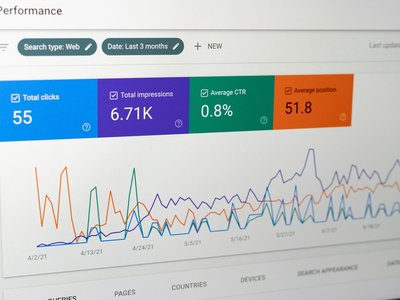
Google’s latest update has caused a major drop in Search Console impressions, but it’s not a bug. It’s a clean-up. Learn why your rankings are actually stronger and how to respond strategically.

Your marketing might be working, just not well enough. If your campaigns are flatlining or your audience is tuning out, it could be time for a rethink. Here are the five telltale signs your business needs a complete marketing overhaul.

Hiring marketing leadership is not just about finding someone to run campaigns. A Fractional Chief Marketing Officer (CMO) may be the solution your company needs.