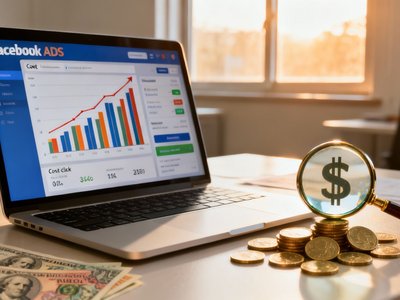
Facebook Ad Costs: How Much Does It Cost for Facebook Ads
Explore how much does it cost for facebook ads for Australian businesses, with budgeting ranges, ROI tips, and practical steps to start today.
26 Feb 2026
Wondering how much do Facebook ads cost in Australia? This guide breaks down the key factors influencing your budget, from CPC and CPM to audience and creative.
Blog
So, you want to know the magic number. I get it. You're trying to figure out if this whole Facebook ads thing is worth it, and you need a figure to plug into your budget. You just want a straight answer to "how much do Facebook ads cost?".
Let's cut to the chase. In Australia, you could pay anywhere from AUD 1.15 for a single click... to over AUD 3.20. Sometimes more.
But that number? It's almost useless without context.
Okay, so we have a starting range. But asking about Facebook ad costs is a bit like asking, "how much does a car cost?". The real answer is always, "Well, it depends." Are you after a beat-up old hatchback to get you from A to B, or are you eyeing a brand-new SUV with all the fancy extras? The price tags are on different planets.
Facebook ads work the same way. It's not like buying a fixed-price item off a shelf. You're stepping into a massive, live auction, bidding for a slice of your ideal customer's attention in a super crowded, noisy marketplace. And believe me, it can get noisy.
Let's get down to it. You've probably heard it all. "You can start with just $5 a day!" right alongside horror stories of someone's cousin who blew a thousand bucks in a weekend with nothing to show for it. And the most frustrating part? Both of those stories can be true. It’s exactly why this whole thing feels so confusing and, honestly, a little scary when you're starting out.
The main thing you'll be watching like a hawk is your Cost Per Click (CPC). It's simple, really. It’s just the price you pay each time someone actually clicks on your ad.
This infographic gives you a quick snapshot of the global averages.
As you can see, while the lower end looks pretty friendly, those costs can easily triple depending on a few key things we're about to dig into.
Recent data for 2025 shows that Aussie businesses are seeing average Cost Per Click (CPC) rates hovering somewhere between AUD 1.15 and AUD 3.20. That range is a perfect reflection of our competitive landscape down under. Things like who you're trying to reach, how good your ad actually is, and the bidding strategy you choose all play a huge part.
Just think about it. A law firm in a fancy part of Sydney is going to pay a massive premium for clicks compared to a local cafe in Adelaide. Why? Because the competition for that legal client is absolutely fierce, and the potential value of that one click is enormous.
It’s so easy to feel frustrated when you can't get a simple, fixed price. I've been there. Staring at a blank Ads Manager screen, feeling that little knot in my stomach, wondering if I'm about to just light my money on fire.
But once you realise you have way more control than you think... it all starts to make sense.
Here’s the big secret. The goal isn't just to find the cheapest clicks. The goal is to find the most valuable clicks at the best possible price. A $3 click that leads to a $300 sale? That's a huge win, and I'd take that all day long.
Several key factors determine where your costs will land. These are the levers you can actually pull to change what you pay:
This guide is your anchor point. No fluff, no wild guesses. For a deeper dive, check out Your Guide to Facebook Advertising Costs in Australia. We'll spend the rest of this article breaking down exactly why your costs are what they are and, more importantly, how you can make every single dollar count.
So, where do these numbers even come from? It’s not like Facebook has some secret price list locked away in a vault. The reality is much more alive... and a little bit chaotic.
Every single time there’s an open ad spot on someone's feed, a lightning-fast auction happens behind the scenes. We're talking billions of them, every single day. But here’s the most important thing you need to understand about how much Facebook ads cost: it’s not always the highest bidder who wins.
Think about it for a second. If the winner was just the business with the deepest pockets, our feeds would be a miserable wall of boring, expensive ads from huge corporations. That would make people stop using Facebook, which is the last thing Meta wants.
So, they built a much smarter system.
Imagine you're trying to get the best table at a super popular, exclusive restaurant. Just slipping the host the most money doesn't guarantee you the spot. They care about the vibe of the place. They're looking for the total package... not just the cash.
The Facebook ad auction is exactly like that. It’s less like a simple auctioneer and more like a panel of judges at a talent show. They’re judging your ad on three key things to decide who gets the spotlight.
This “total value” is what determines the winner. It's a combination of:
This is the secret weapon for small businesses. A fantastic, engaging ad with a modest budget can absolutely beat a boring, irrelevant ad with a massive budget. I've seen it happen time and time again.
This is where it all comes together. Facebook wants to show its users stuff they’ll actually enjoy or find useful. When you create an ad that people find genuinely interesting, Facebook rewards you for making their platform a better place to be.
The system is designed to maximise value for both people and businesses. The winning ad in an auction isn't necessarily the one with the highest bid, but the one that's expected to create the most overall value.
What this really means is that a high-quality ad with great engagement gets a massive thumbs-up from the algorithm. Facebook sees that people like your ad, so it predicts they'll be more likely to take action. This boosts your ad's "total value," letting you win auctions even with a lower bid.
You’re essentially getting a discount for not cluttering up their platform with junk. You're helping the restaurant keep its cool vibe, so the host gives you a better table for less. That’s why focusing on making great ads is the single best way to lower your costs. Seriously.
Okay, so the auction isn’t just about who has the deepest pockets. That’s fantastic news. It means you’re not just a passenger on this crazy ride; you’re actually in the driver’s seat.
While that auction happens in the blink of an eye, you have five powerful levers you can pull to directly influence what you pay. Getting a handle on these is how you move from just spending money to investing it. Big difference.
Let's walk through each one, nice and simple. Like we're chatting over coffee.
Who are you trying to talk to? This is probably the biggest factor affecting your costs.
Imagine you're trying to sell high-end financial advice. Targeting a small, specific group like dentists in inner-city Melbourne is going to be expensive. Why? Because you’re not the only one. Heaps of other businesses want to talk to that exact same group, so you're all bidding for the same limited ad space. It's like a real estate auction in a hot suburb.
It’s just basic supply and demand. Now, if you're selling something with broader appeal, like a popular brand of runners, your audience is huge. There’s more ad space to go around, and the cost per person usually drops.
The trick isn't always finding the cheapest audience. It's about finding the sweet spot: the most valuable audience you can afford to reach profitably.
This is the fun part. It’s also where so many businesses fall flat. Is your ad genuinely interesting? Does it stop someone mid-scroll and make them pause? Even for a second?
Facebook's main goal is to keep people on Facebook. They want people to have a good time. So, if your ad is engaging, relevant, and people are actually interacting with it, Facebook rewards you with lower costs. It sees your ad as a good thing, not an annoying interruption.
On the other hand, a boring, low-quality ad that people hide or ignore gets penalised. Facebook will charge you more to show it because, frankly, you’re making their platform a little bit worse. Great creative isn’t just about looking good; it's a direct cost-saving strategy.
What are you actually trying to do here? When you set up a campaign, Facebook asks you this right at the start. Are you looking for:
Each of these goals has a different value, both to you and to Facebook's algorithm. Getting someone to pull out their credit card is a much bigger ask than just getting them to click a link. Because of that, conversion-focused objectives like Sales almost always cost more than simple Traffic or Awareness goals. You're paying a premium for a higher-value action. It makes sense when you think about it that way.
This one is just common sense.
Trying to sell heaters in the middle of a Melbourne winter? It’s going to be easier, and your ads will probably perform better and cost less per sale. Trying to sell those same heaters in a Brisbane summer... well, good luck with that. You’ll be paying a lot more to convince anyone.
Competition also heats up at certain times of the year. Think about the lead-up to Christmas, Black Friday, or Mother's Day. Every single retailer is fighting for the same eyeballs, and that intense competition drives the price of ads way up for everyone. It's something you have to plan for.
Finally, some industries are just a tougher playground than others. Simple as that.
Sectors like finance, insurance, and real estate are notoriously expensive. A single new client can be worth thousands of dollars, so businesses in those spaces are willing to bid much, much higher. You're competing with some very deep pockets.
If you're in a less saturated market, like selling handmade pottery or offering local dog walking services, the competition is far lower. This generally means how much you pay for Facebook ads will be much more reasonable. Knowing where you sit helps you set realistic budget expectations from the very start.
Understanding these levers is your first step, but using them is what really counts. One of the most powerful strategies for controlling your ad spend is mastering Campaign Budget Optimization (CBO), which lets Facebook's clever algorithm automatically put your budget behind your best-performing ad sets.
Right, theory is one thing, but what does this all look like with actual Aussie dollars on the table? Let's move past the 'what ifs' and into some practical scenarios you can actually wrap your head around. Because knowing how much Facebook ads cost is half the battle. Knowing what you can actually do with your money is the real game-changer.
Let's be crystal clear though: there's no magic number here. Anyone who promises you a secret formula is selling something. What I want to do instead is walk you through how a marketing pro thinks. How they'd look at a budget, set some clear goals, and start putting that money to work.
Imagine you run a cosy little coffee shop in Subiaco, Perth. You’ve got your regulars, but you really want to get more people through the door, especially during those quiet weekday mornings. Your goal isn’t selling stuff online; it’s getting more bums on seats.
Your Monthly Budget: $500
With a smaller budget like this, you can't afford to be vague. You have to get hyper-local and laser-focused. A $500 budget is absolutely doable, but every single dollar has to pull its weight.
Here’s how you might approach it:
With this budget, you're not going to be on everyone's feed every day. But you can absolutely become a familiar, friendly face to the people who live and work right in your neighbourhood. It’s all about creating that consistent, local presence.
Now, let's switch gears. Picture yourself as the founder of an online-only clothing store based in Brisbane. You're about to launch a new winter collection. You’ve got a bit more cash to play with and a purely digital goal: sales.
Your Monthly Budget: $2,500
A budget this size lets you get a bit more sophisticated. You're not just shouting into the void; you’re building a proper sales funnel. You need to find new customers, of course, but you also can't afford to forget the people who already know who you are.
This is where you split your budget strategically.
The biggest mistake I see businesses make is throwing all their money at finding new customers while completely ignoring the low-hanging fruit: the people who have already visited their site. Retargeting isn't just a clever tactic; it's often where the real profit is hiding.
Your budget could be split something like this:
This kind of structured approach gives you a solid framework to build from, turning a simple budget into a genuine growth engine for your store.
Alright, now for the bit you’ve been waiting for. The fun part.
We’ve covered the auctions, the levers, and how to think about your budget. But how do you actually make every single dollar work harder for you? Let's get into some real, practical tactics you can use today to drive down your Facebook ad costs without killing your ambition.
It’s less about finding a secret "hack" and more about being smarter. More deliberate. And that all starts with who you're talking to.
Throwing your ad out to a massive, generic audience is like trying to sell steak to a room full of strangers and hoping a few of them aren't vegetarian. It’s expensive. It's inefficient. You just end up paying to reach thousands of people who will never, ever buy from you.
The key to lowering your costs is to talk to people who are already warmed up to you.
Retarget Your Website Visitors: This is the lowest-hanging fruit there is. You can create an audience of people who have visited your website in the last 30, 60, or 90 days. These people already know who you are. They’re not cold leads; they’re warm. Showing them a gentle reminder ad is almost always cheaper and more effective than starting from scratch.
Build Lookalike Audiences: This is one of Meta’s most powerful tools. Seriously. You can take a list of your best customers, upload it, and ask Facebook to go find more people just like them. It’s like giving the algorithm a scent to follow, and it’s incredibly good at finding new customers who share the same DNA as your existing ones.
These warm audiences almost always have a lower cost per result. Why? Because they’re already partway down the path... you're just giving them a helpful little nudge.
You can't just create an ad, set it live, and cross your fingers. That’s not a strategy; that's gambling. The most successful advertisers I know are relentless testers. They treat it like a science experiment.
This is called A/B testing, and it's simpler than it sounds. You create two (or more) almost identical ads but change just one little thing at a time.
A tiny improvement in your ad's performance doesn't just feel good; it has a massive ripple effect. A slightly higher click-through rate tells Meta's algorithm your ad is high quality, which means it rewards you with a lower cost to show it.
So, what should you be testing?
You’ll be amazed at how a small tweak can dramatically slash your cost per result. It takes a little more effort upfront, but it stops you from burning cash on an ad that just isn’t connecting. If you're looking for more ideas, we've got a fantastic guide on mastering Facebook ads by learning how to target and write ads that work.
Sometimes, the reason your ads are expensive has nothing to do with the ad at all. Think about it. You can have the most brilliant, compelling ad in the world, but if it leads to a terrible website... you’ve just wasted your money.
A clunky, slow-loading, and confusing landing page will absolutely murder your conversion rates. People will click your ad, get frustrated, and leave immediately. Facebook’s algorithm sees this. It knows that people are bouncing right off your page, which tells it your user experience is poor.
And it will penalise you for it with higher ad costs.
Make sure your landing page is clean, fast, and works beautifully on a phone. A brilliant ad leading to a bad website is the fastest way I know to burn through a marketing budget.
Okay, we've covered a lot. You understand the auction, the levers, the budget scenarios... but the biggest question is probably still rattling around in your head.
Should you be the one doing all this?
Honestly, for a lot of business owners, doing it yourself is the right first step. I remember my first time poking around in Ads Manager. It felt like trying to fly a spaceship with a manual written in another language. But it’s an incredible, hands-on learning experience that teaches you so much about your customers.
You have to get in there and get your hands dirty at some point.
But there’s a tipping point. Every business owner hits it. It’s that moment when your time becomes far more valuable working on the business… you know, thinking about new products, talking to customers, leading your team… than getting lost in the weeds of campaign setup.
That’s the moment when what used to be a learning experience starts to feel like a frustrating chore that’s holding you back.
So, how do you know you're there? A few signs usually pop up.
This is the mindset shift. Hiring a specialist isn't just another cost on the books; it's an investment in efficiency and growth. Think about it like this... a great ads manager can often save you more money in wasted ad spend than their fee actually costs.
They live and breathe this stuff. They see trends you don't, understand the tiny algorithm updates, and know exactly which levers to pull when things go sideways. They turn that confusing spaceship dashboard into a well-oiled machine.
It's not about admitting defeat. It's about making a strategic decision to trade your time and stress for expertise and results, allowing you to focus on what you do best.
If you’re comfortable setting up the basics but want to make sure you're doing it right, our guide on how to set up a Meta ad campaign is a great resource. But if you’ve read that and still feel that pit in your stomach, it might be time to call in some help.
Ultimately, the choice comes down to a simple calculation of time, money, and stress. If you’ve got more time than money, DIY is the way to go. But once your money becomes a renewable resource and your time becomes the most precious thing you have, bringing in an expert is one of the smartest growth decisions you can make.
We get it. Even after breaking it all down, there are probably still a few nagging questions rattling around. It's a common feeling for Aussie business owners trying to get a handle on what Facebook ads really cost.
You're not alone in thinking it’s a bit of a maze... so let's clear up a few more of the big ones.
The short answer? Yes, absolutely. Facebook's sheer scale gives you access to customers you just can't find anywhere else. But, and this is a big but, it's only worth it if you have a clear plan.
Think of it like this: throwing money at ads without a strategy is like buying expensive fishing gear but having no idea where the fish are. It's just a pricey way to waste a weekend. When you do it right, with the right bait and the right spot... it's one of the most effective ways to grow your business.
This is the million-dollar question. If your costs feel sky-high, it usually boils down to one of two things: intense competition or low relevance.
First, you might be targeting a really popular audience that every other brand wants a piece of. It’s like trying to buy a house in a hot suburb during a boom. The bidding war drives the price up for everyone.
The other reason is a bit tougher to hear: your ad just might not be connecting with people. If Facebook's algorithm sees users scrolling right past your ad without a second glance, it'll start charging you more to show it.
High ad costs are a signal. They’re telling you to either refine your audience, improve your ad creative, or both. It’s the platform’s way of saying, "This isn't quite working."
You can technically start with just a few dollars a day, but you're not going to get very far. For most Australian businesses looking to gather real, useful data, a starting point of $20 to $50 per day is much more realistic.
This gives the algorithm enough fuel to actually learn who to show your ads to and figure out what works. Starting too small is like trying to drive from Sydney to Melbourne on half a tank of petrol... you'll run out of gas long before you get a clear picture of whether the journey was even worth it.
Feeling like you need an expert navigator for your Facebook ads journey? Cemoh connects you with the top 1% of pre-vetted marketing talent in Australia, from freelance specialists to fractional CMOs. Find the right expert to lower your ad costs and drive real results at https://cemoh.com.
Here are some suggested articles that are closely related to this post
Explore how much does it cost for facebook ads for Australian businesses, with budgeting ranges, ROI tips, and practical steps to start today.
What's the real cost to advertise on Facebook in Australia? We break down the key factors, average costs, and how to set a budget that actually works.

Tired of marketing plans that just gather dust? Learn how to create a marketing plan with actionable strategies and real-world advice to drive growth.

Thinking about hiring a Google Ads consultant? Learn how a real expert can boost your ROI, what to look for, and how to avoid the time-wasters.

Thinking about outsourcing social media manager duties? This guide covers how to find, hire, and manage the right expert for your Australian business.

What is digital marketing consulting and how does it work? We explain what a consultant does, why you need one, and how to hire the right partner in Australia.