
What Is Digital Marketing Consulting?
What is digital marketing consulting and how does it work? We explain what a consultant does, why you need one, and how to hire the right partner in Australia.
04 Mar 2026
There's a version of BrewDog that could have scaled successfully. But it required discipline they didn't have.
Blog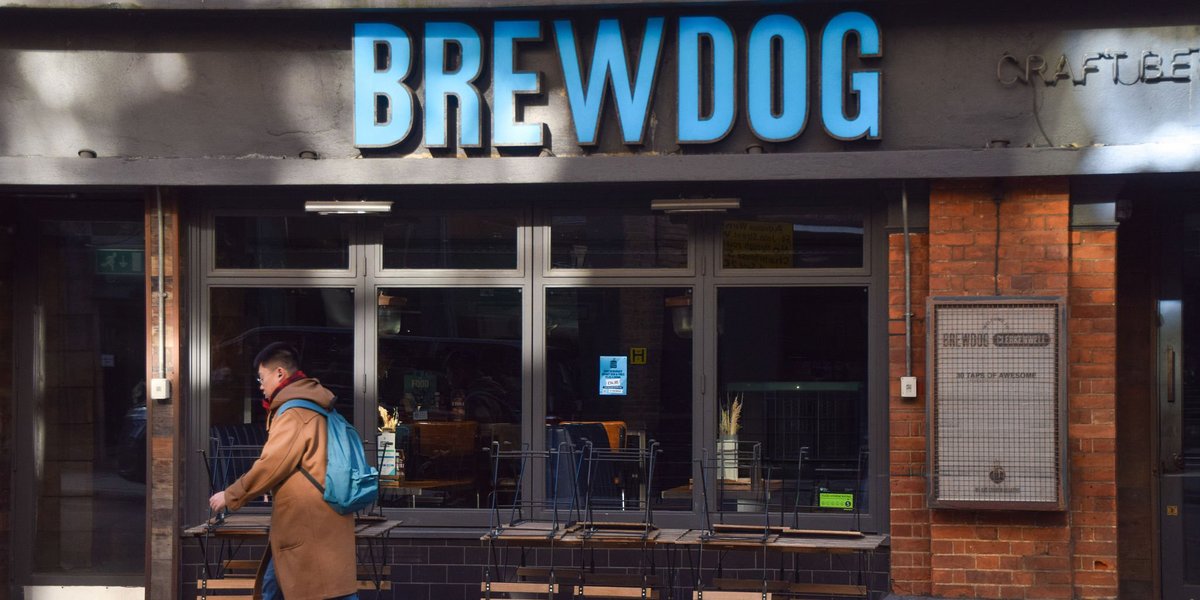
There's a brutal kind of irony in watching a brand that built itself on rebellion against the establishment become the establishment... and then fail at that too.
BrewDog just fell into administration. Sold to a US cannabis and craft beer company called Tilray for £33 million. That's not a typo. Thirty-three million pounds. For a brand that once had a valuation of £2.7 billion.
That's a 97% collapse in value. In nine years.
Let that sink in for a moment.
To be fair to the story, the early years of BrewDog were genuinely exciting. Two mates in their mid-twenties, a £20,000 bank loan, brewing beer out of Aberdeenshire and selling it out of the back of a van. They were loud, provocative, and, crucially, they were right about something important: the beer market was boring, and people wanted more.
Punk IPA became one of the most recognisable craft beers in the world. Their crowdfunding model "Equity for Punks" was genuinely innovative, raising over £75 million from 220,000 individual investors who didn't just buy shares, they bought into a movement.
That's not nothing. That's actually remarkable.
The problem wasn't that BrewDog got big. The problem was what happened to them when they did.
Here's the thing about building a brand on rebellion: you have to keep being rebellious. You can't just say you're punk. You have to act like it. Consistently. Every decision, every campaign, every time something hard comes up.
BrewDog's identity was built on standing up to the corporate beer giants. On caring about quality. On treating people (staff included) better than the old guard ever did. That was the promise. That was the whole deal.
And then they started breaking it.
A BBC documentary exposed a toxic workplace culture. Staff described fear and intimidation. Former employees lined up to tell the same story. The B-Corp certification they'd worn as a badge of honour? Gone. Stripped after an investigation.
In 2024, they quietly stopped paying new employees the real living wage. A company that had built its brand on ethical credentials was now paying the legal minimum to its bar staff.
You can't market yourself as the anti-establishment choice while treating your workers like the establishment always has. Customers notice. Eventually.
There's a version of BrewDog that could have scaled successfully. But it required discipline they didn't have.
Instead, they expanded everywhere - bars in the UK, US, Europe, and Asia, burning cash at a rate that would make most CFOs weep. Five consecutive years of pre-tax losses. £148 million in the red since their last profitable year in 2019. A £37 million loss in 2024 alone.
Revenue sat stubbornly around £357 million and barely moved. All that real estate, all those staff, all that overhead, for essentially flat growth.
This is what reckless expansion looks like in slow motion. Not one catastrophic moment, but a hundred individual decisions that prioritised size over sustainability, presence over profit.
You can't talk about BrewDog without talking about James Watt.
Charismatic, controversial, and, I'll be honest, often compelling in the early days. The sort of founder who makes you believe the vision. But the same traits that make those founders electric in a startup become liabilities at scale.
The gold beer can debacle. The US federal law breach over unapproved beer ingredients. The ASA rulings. The constant controversy. Each one, on its own, survivable. Accumulated over years, they become a pattern, and a brand reputation problem.
Watt stepped down as CEO in March 2024. Then apparently considered bidding £10 million of his own money to buy the business back. Then withdrew that bid as the sale process accelerated.
That's not a clean exit. That's someone who knew things were going badly and couldn't quite let go or fully commit. Neither in nor out, which is often worse than either.
The part of this story that genuinely stings is the Equity Punks.
220,000 ordinary people who believed in a brand. Who put their money in at various crowdfunding rounds. Who were sold the dream of being part of something different, something better, something that was going to change the way business worked.
They're almost certainly getting nothing.
The private equity firm TSG Consumer Partners, who took a 22.3% stake in 2017 with preferential terms? They'll be fine. The founders, who reportedly each pocketed around £100 million when they sold their stake to TSG? They'll be fine.
The 220,000 people who believed the story? Left holding the bag.
There's a lesson in there for anyone who has ever been seduced by the idea of "investing" in a brand you love. Brand loyalty and investment returns are two very different things, and conflating them is a trap.
I've spent a long time working with brands across Australia, building them, growing them, fixing them. And the BrewDog story is one of the cleanest examples I've seen in years of what happens when a brand loses the plot.
A few things stand out:
Brand identity isn't a costume. You can't put on "punk" for the marketing and then take it off when it's inconvenient. The whole thing falls apart the moment customers see through it. And they always see through it.
Expansion without a sustainable business model is just burning money with better PR. Growth is great. Profitable growth is better. Knowing the difference before you've signed 60 bar leases around the world is ideal.
Treating your people poorly is a brand problem, not just an HR problem. Every time BrewDog cut wages or a toxic culture story leaked, that wasn't just a management failure, it was brand damage. In a world where your staff are your most visible ambassadors, you can't afford to treat them as a cost to be minimised.
Crowdfunding goodwill comes with obligations. When you raise money by selling a story, you're obligated to live that story. BrewDog used its community as a marketing asset while slowly abandoning everything that community actually cared about.
Maybe. Tilray's CEO says the business "needs some love" and "needs some innovation." He's not wrong. And at £33 million for a globally recognised brand, the bones are there.
But the challenges are real. The brand is damaged. The bar estate is decimated. The goodwill is gone. And the craft beer market isn't what it was in 2017.
Fixing BrewDog isn't just a financial exercise. It's a brand exercise. Tilray will need to decide what BrewDog actually stands for now, and whether there's still an audience that cares.
My instinct? The brand name has value. Punk IPA still has equity. But the story needs to be rewritten from scratch, not just updated.
That's doable. It's just really, really hard.
The rise of BrewDog was a genuinely great brand story. The fall of BrewDog is an equally instructive one.
Sometimes, the best marketing case studies aren't the success stories.
Simon Dell is the CEO of Cemoh, Australia's fractional marketing network, connecting businesses with experienced fractional CMOs and marketing professionals. Find out more at cemoh.com.
Here are some suggested articles that are closely related to this post
What is digital marketing consulting and how does it work? We explain what a consultant does, why you need one, and how to hire the right partner in Australia.

Explore how a fractional CMO Australia can elevate your marketing strategy, reduce costs, and drive growth for your business. Find out more now!

Thinking about outsourcing social media manager duties? This guide covers how to find, hire, and manage the right expert for your Australian business.

Finally, a practical marketing strategy for small business owners in Australia. No jargon, just real-world advice to help you connect with customers and grow.

Thinking about hiring a Google Ads consultant? Learn how a real expert can boost your ROI, what to look for, and how to avoid the time-wasters.

Learn what is growth marketing with our practical guide to mindset, strategies, and experiments that drive real, sustainable business growth.